
St. Patrick’s Day, celebrated every year on March 17th, is more than just a day of wearing green and looking for lucky four-leaf clovers. It is an opportunity for children to explore history, culture, and creativity while having fun. Whether you are a parent, teacher, or caregiver, there are many ways to incorporate this holiday into a child’s learning and development. In this article, we will dive into the origins of St. Patrick’s Day, its significance, and engaging ways to celebrate with kids through activities that encourage their cognitive, motor, and social skills.
The History of St. Patrick’s Day: A Kid-Friendly Explanation
St. Patrick’s Day is named after St. Patrick, the patron saint of Ireland. Although the holiday has its roots in religious traditions, today it is widely celebrated by people of all backgrounds. St. Patrick was a missionary who brought Christianity to Ireland in the 5th century. According to legend, he used the shamrock, a three-leafed clover, to explain the concept of the Holy Trinity. Over time, the holiday evolved into a global celebration of Irish culture, symbolized by green clothing, parades, and various folklore elements such as leprechauns and pots of gold.
For children, St. Patrick’s Day can serve as an introduction to cultural appreciation. Through stories and simple explanations, they can learn about Ireland’s history and customs, broadening their understanding of the world.
Educational Activities for St. Patrick’s Day
1. St. Patrick’s Day-Themed Storytime
Reading books about St. Patrick’s Day helps children develop their listening and comprehension skills while also sparking their imagination. Some great books to consider include:
– The Night Before St. Patrick’s Day by Natasha Wing
– How to Catch a Leprechaun by Adam Wallace
– Patrick: Patron Saint of Ireland by Tomie dePaola
Encourage discussions about the stories, asking open-ended questions such as, “What would you do if you found a pot of gold?” This builds critical thinking and verbal expression skills.
2. Shamrock Counting and Math Games
Math can be fun when tied to a theme! Using green shamrocks cut from paper or small green objects, children can practice counting, addition, and subtraction. For example:
– Count how many shamrocks are in a pile
– Group them into sets of three to reinforce the story of St. Patrick and the Holy Trinity
– Create simple addition problems using gold coins and a pot (e.g., “If we add two gold coins to the pot, how many do we have now?”)
These hands-on math activities help develop numeracy skills in an engaging way.
3. DIY Leprechaun Traps: Engineering and Problem-Solving
Encourage creativity and critical thinking by challenging kids to build their own leprechaun traps. Using craft supplies like paper, tape, pipe cleaners, and popsicle sticks, children can design and build traps to “catch” a mischievous leprechaun.
This activity promotes problem-solving, spatial awareness, and fine motor development. Plus, it provides a fun way to introduce basic engineering concepts.
4. Sensory Play: Green Slime and Rainbow Rice
Sensory activities help develop fine motor skills and cognitive functions. For St. Patrick’s Day, you can create:
– Green slime: A simple mix of glue, baking soda, and contact lens solution makes a gooey, stretchy slime that kids will love playing with.
– Rainbow rice: Dying uncooked rice in different colors and mixing them together allows children to explore textures and patterns while engaging in creative play.
Encourage them to hide and find small treasures within the sensory materials, turning it into a treasure hunt.
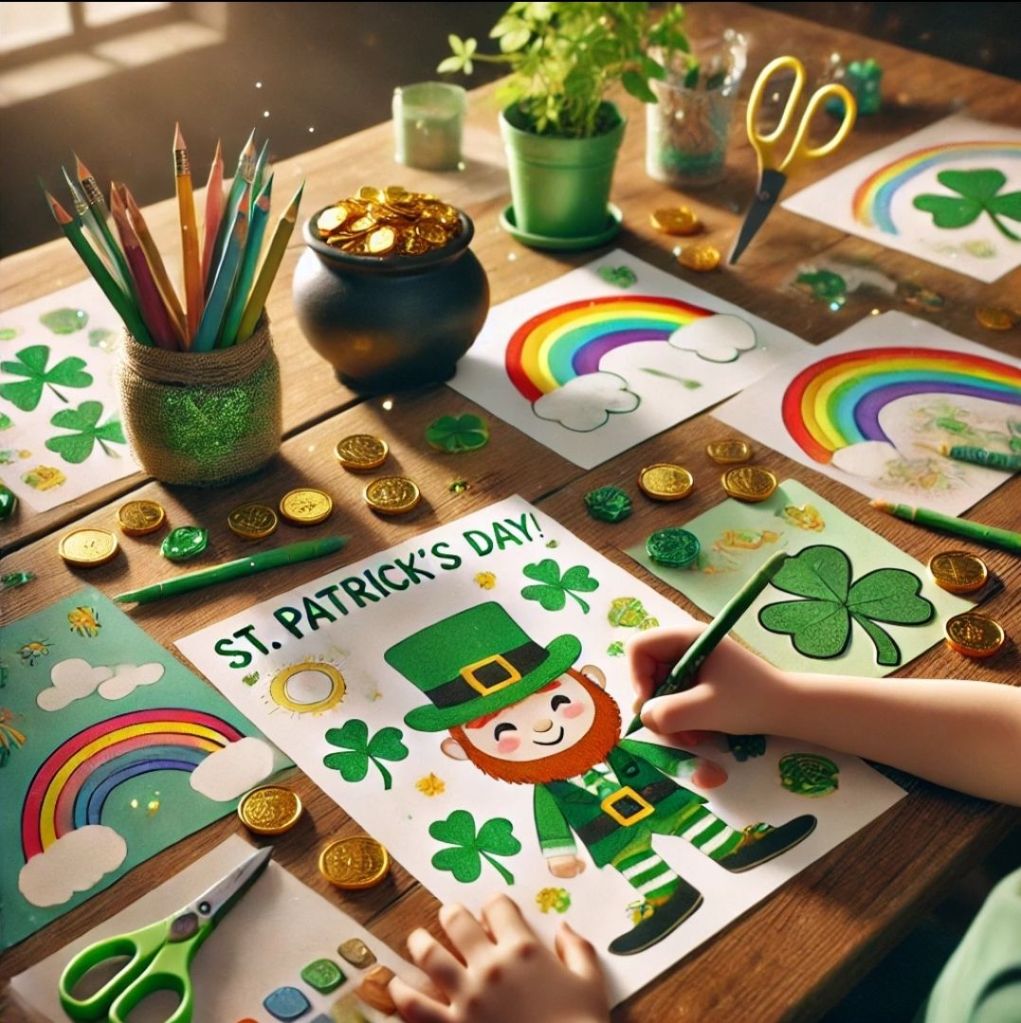
5. Arts and Crafts: Shamrocks, Rainbows, and Leprechauns
Art activities help children develop fine motor skills and express their creativity. Some simple St. Patrick’s Day crafts include:
– Shamrock sponge painting: Cut a sponge into the shape of a shamrock, dip it in green paint, and stamp it onto paper.
– Rainbow paper chains: Create long chains of construction paper in rainbow colors and use them to decorate a classroom or play area.
– Leprechaun masks: Using paper plates, markers, and cotton balls, kids can create their own leprechaun faces to wear during celebrations.
Encourage storytelling alongside the crafts by asking children to invent a tale about their artwork.
Developing Social Skills Through St. Patrick’s Day Activities
Celebrating St. Patrick’s Day with group activities helps children build social skills like cooperation, communication, and sharing. Some fun group activities include:
– Musical Shamrocks: Similar to musical chairs, but with paper shamrocks placed on the floor. When the music stops, children must find a shamrock to stand on.
– Pass the Pot of Gold: Using a small pot filled with pretend gold coins, children pass it around while music plays. When the music stops, the child holding the pot gets to take a coin out and name something they are grateful for.
– St. Patrick’s Day Parade: Let children march around while playing instruments, waving green flags, or wearing homemade St. Patrick’s Day hats.
These activities promote teamwork and build confidence in a playful environment.
Healthy St. Patrick’s Day-Themed Snacks
Food is a great way to celebrate any holiday! Incorporate fun, healthy snacks into the day with:
– Green fruit salad: Use green apples, kiwi, grapes, and honeydew melon.
– Shamrock-shaped sandwiches: Use a shamrock cookie cutter to shape sandwiches for a festive touch.
– Rainbow veggie platter: Arrange bell peppers, carrots, cucumbers, and tomatoes in rainbow order, served with hummus or yogurt dip.
– Leprechaun smoothie: Blend spinach, banana, and yogurt for a healthy green drink.
Involving children in the preparation of these snacks teaches them about healthy eating and fosters independence.
👉 Download Your Free St. Patrick’s Day Activity Pack! 🎉
Conclusion: Making St. Patrick’s Day Meaningful for Kids
St. Patrick’s Day is not just about green decorations and festive parades—it is a wonderful opportunity for children to learn about history, culture, and creativity while having fun. By incorporating engaging activities such as storytelling, arts and crafts, sensory play, and group games, children can develop valuable skills while celebrating the holiday in an educational way.
Whether you are reading books about St. Patrick, building a leprechaun trap, or enjoying a green smoothie, the key is to make learning fun and interactive. This not only helps children develop cognitive and motor skills but also creates lasting memories of a joyful and meaningful celebration.
So this St. Patrick’s Day, embrace the luck of the Irish and dive into the magic of learning and play with your little ones!




 Bright Minds Journey
Leave a comment