
Problem-solving is an essential life skill that helps children navigate challenges, make decisions, and develop resilience. It’s not just about finding the right answer—it’s about learning to think critically, analyze situations, and adapt to different circumstances. As parents, educators, and caregivers, we play a significant role in helping children develop these skills. The good news is that teaching problem-solving doesn’t have to be a formal or rigid process. In fact, some of the best learning happens when children are engaged, relaxed, and having fun.
In this article, we’ll explore how to foster problem-solving abilities in children through playful activities. We’ll cover why problem-solving is so important, the benefits of learning through play, and offer practical games and activities that encourage critical thinking and creativity.
Why Problem-Solving Skills Matter for Kids
From a young age, children encounter situations that require them to solve problems. Whether it’s figuring out how to build a taller block tower, deciding how to share toys with friends, or choosing what to do when something doesn’t go as planned, problem-solving is a part of everyday life.
Here are some key reasons why developing these skills is crucial:
Encourages independence: Problem-solving empowers children to make decisions on their own rather than relying on adults for answers.
Builds resilience: Learning how to overcome obstacles helps children develop perseverance and bounce back from failure.
Enhances creativity: Problem-solving often requires thinking outside the box and coming up with innovative solutions.
Promotes social skills: Many problems involve working with others, which helps kids practice communication, empathy, and teamwork.
Prepares for future success: Problem-solving is a foundational skill for academic achievement and future careers.
The Power of Learning Through Play
Play is one of the most effective ways for children to learn and develop problem-solving abilities. When kids play, they naturally encounter challenges and situations that require critical thinking. More importantly, they’re motivated to overcome these challenges because they’re having fun.
Here’s why play works so well:
Low-pressure environment: Play reduces stress and allows children to take risks without fear of failure.
Engages curiosity: Games and playful activities tap into a child’s natural curiosity, encouraging exploration and experimentation.
Reinforces learning: Repetition during play helps reinforce problem-solving strategies and techniques.
Promotes hands-on learning: Play often involves tangible, hands-on experiences that make abstract concepts easier to understand.
Playful Activities to Strengthen Problem-Solving Skills
Let’s explore some engaging activities and games that can help children become confident problem solvers. These activities can be adapted for different ages and abilities.
1. Building Challenges with Blocks or LEGO®
How it works: Give your child a set of building materials like blocks, LEGO bricks, or other construction toys. Present a specific challenge, such as building the tallest tower possible, creating a bridge that can hold weight, or designing a house for a toy figure.
Why it helps: These activities encourage kids to plan, experiment, and troubleshoot. They’ll learn how different shapes and structures work together, and they’ll need to adjust their designs when something doesn’t work as expected.
Tip: You can add time limits or specific “rules” to make the challenges more exciting.
2. Treasure Hunts and Scavenger Hunts
How it works: Create a treasure hunt by hiding clues around the house or yard that lead to a final prize. Each clue requires solving a riddle or completing a small task to move forward.
Why it helps: These hunts encourage critical thinking, reading comprehension, and logical reasoning. They also promote patience and persistence as kids work through each step of the challenge.
Tip: Make the clues age-appropriate and increase complexity as your child’s skills develop.
3. Puzzle Games and Brain Teasers
How it works: Provide age-appropriate puzzles like jigsaw puzzles, Sudoku, mazes, or logic games. Board games like “Rush Hour,” “ThinkFun Gravity Maze,” or classic card games like “Uno” can also challenge children to think strategically.
Why it helps: Puzzles encourage pattern recognition, spatial reasoning, and step-by-step thinking. They also teach kids to stay focused and practice patience.
Tip: Celebrate small victories to keep motivation high, and let kids work together to solve tougher challenges.
4. Role-Playing and Pretend Play
How it works: Encourage your child to engage in pretend scenarios where they take on different roles. For example, they could play as a shopkeeper, a chef in a restaurant, or a doctor helping patients.
Why it helps: Pretend play lets children create and solve problems within imaginary situations. They practice negotiation, decision-making, and empathy while figuring out how to run their “business” or help their “customers.”
Tip: Join in the fun! Adults can ask questions or introduce new problems into the scenario to keep the play dynamic and challenging.
5. STEM Experiments and Challenges
How it works: Simple science experiments and engineering challenges are fantastic for hands-on problem-solving. Try activities like building a paper airplane that flies the farthest, creating a homemade volcano, or constructing a boat that floats.
Why it helps: STEM activities foster curiosity and encourage the scientific method: asking questions, forming hypotheses, testing, and making observations. Kids learn how to handle failure and try again with new ideas.
Tip: Encourage kids to document their experiments and reflect on what worked and what didn’t.
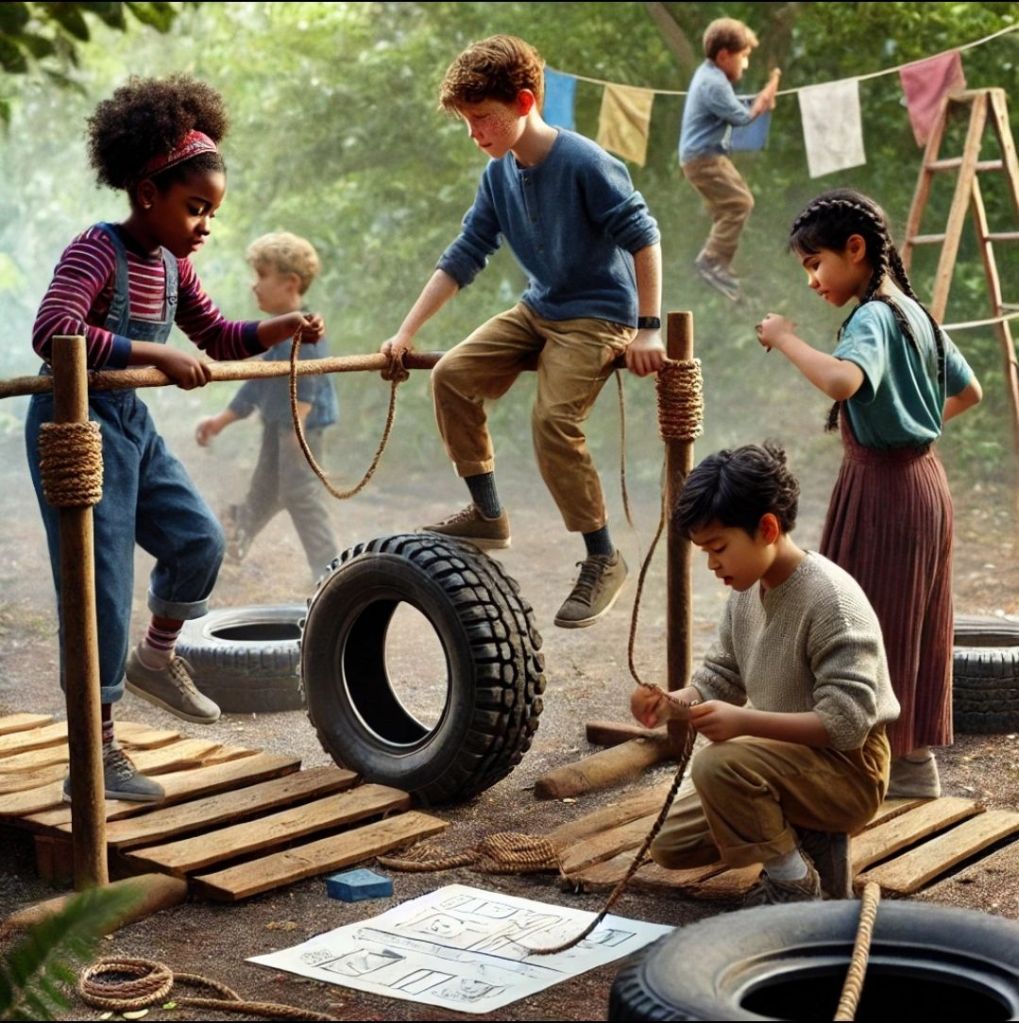
6. Obstacle Courses
How it works: Set up an indoor or outdoor obstacle course using pillows, chairs, ropes, or cones. Challenge your child to complete the course under a time limit or figure out new, creative ways to navigate it.
Why it helps: Obstacle courses build physical problem-solving skills, coordination, and strategic planning. Children need to assess the best way to move from one point to another and adapt their strategies when faced with physical challenges.
Tip: Let your child design their own course and explain how it works. This adds an extra layer of problem-solving.
7. Storytelling and Problem-Solving Stories
How it works: Read books or tell stories that focus on problem-solving. Afterward, discuss the challenges the characters faced and brainstorm alternative solutions together.
Why it helps: Storytelling helps children understand different perspectives and analyze decisions. It promotes empathy and critical thinking.
Tip: You can also ask your child to make up their own stories where they or a character solve a problem.
8. Strategy Games and Board Games
How it works: Games like “Chess,” “Checkers,” “Catan Junior,” and “Blokus” require players to think ahead, plan strategies, and adjust to opponents’ moves.
Why it helps: These games teach strategic thinking, patience, and adaptability. Kids learn how their choices affect outcomes and how to think several steps ahead.
Tip: Start with simple strategy games and move on to more complex ones as your child’s skills grow.
9. Art and Creative Projects
How it works: Provide open-ended art materials like paper, markers, clay, and recycled materials. Challenge your child to create something specific, like a sculpture of an animal or a new invention that solves a problem.
Why it helps: Creative projects encourage divergent thinking—the ability to come up with multiple solutions or ideas. Kids learn to make decisions about materials, design, and execution.
Tip: Display their artwork proudly and ask them to explain their creative process and any challenges they faced.
10. Cooking and Baking Together
How it works: Involve your child in the kitchen by following simple recipes together. Let them measure ingredients, read instructions, and solve problems like adjusting quantities or fixing a recipe that isn’t working as expected.
Why it helps: Cooking requires following steps, measuring accurately, and making adjustments—perfect for practicing problem-solving. It also builds math and reading comprehension skills.
Tip: Choose recipes that allow for creativity, such as decorating cookies or making their own pizza.
Tips for Supporting Problem-Solving During Play
While playful activities are powerful on their own, here are some ways you can further support your child’s problem-solving development:
1. Ask open-ended questions: Instead of giving answers, ask questions like, “What do you think will happen if…?” or “How could we solve this problem differently?”
2. Encourage persistence: Praise effort over outcomes. Remind children that mistakes are part of the learning process.
3. Model problem-solving: Let your child see how you approach problems in everyday life. Narrate your thinking process so they understand how to break down challenges.
4. Give them space: Resist the urge to jump in with solutions. Give children time to figure things out on their own.
5. Celebrate successes: Whether the problem was big or small, acknowledge their hard work and creative thinking.
Final Thoughts
Developing problem-solving skills is one of the most valuable gifts we can offer our children. Through playful activities, kids can practice thinking critically, making decisions, and learning from their experiences in a fun and supportive environment. Whether they’re building with blocks, navigating an obstacle course, or cooking up something tasty in the kitchen, they’re strengthening their ability to tackle challenges with confidence and creativity.
Remember, it’s not about having all the right answers—it’s about learning how to approach problems with curiosity, resilience, and a sense of adventure. So, let’s play, explore, and grow problem-solvers, one fun activity at a time!





 Bright Minds Journey
Leave a comment