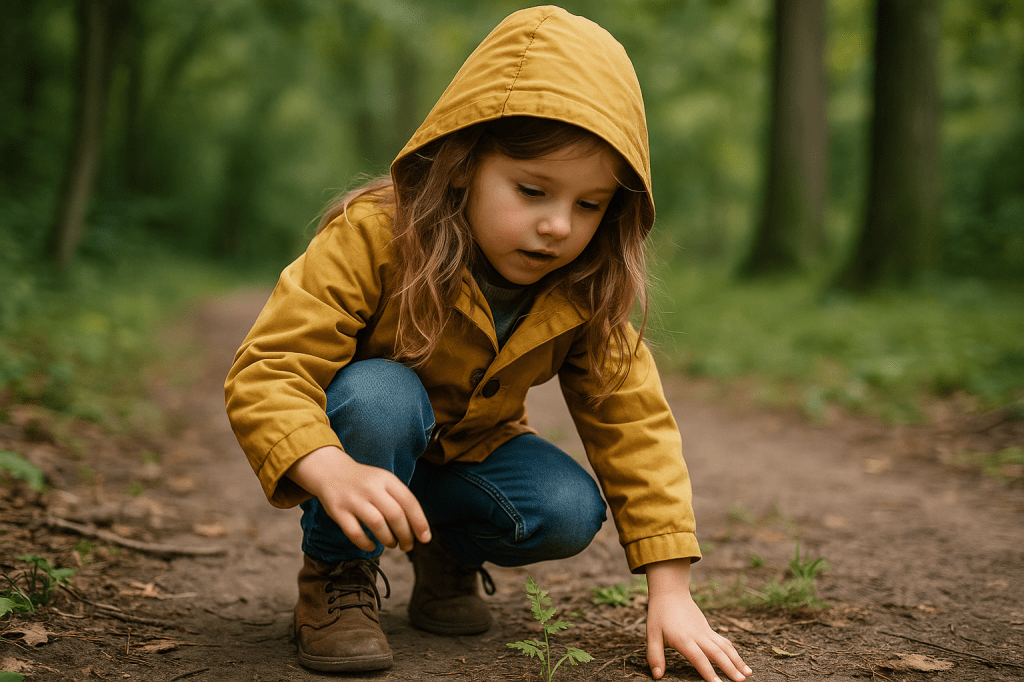
Introduction: Rediscovering the Outdoors
In today’s digital age, children are growing up in a world saturated with screens, structured activities, and limited access to natural environments. Yet, as research and observation show time and again, nature plays a crucial role in healthy child development. Outdoor play is not just about burning energy or getting fresh air—it teaches fundamental life skills that no classroom or app can replicate. But what exactly are those lessons? And why is unstructured outdoor play more important than ever?
—
1. The Science of Nature and Development
Studies consistently show that time spent in nature improves cognitive function, emotional well-being, social skills, and physical health in children. Exposure to green spaces reduces stress, enhances creativity, and improves attention spans—particularly in children with ADHD. According to a study published in Frontiers in Psychology, children who spent more time in nature scored higher in working memory, cognitive flexibility, and self-control. These aren’t just nature-themed perks; they are essential building blocks of learning and personal growth.
—
2. Physical Development: Moving Freely and Fully
Unlike indoor environments where space is limited and movement is often restricted, the outdoors invites full-body motion: running, jumping, climbing, balancing, digging, and more. These natural activities develop gross motor skills, coordination, and muscular strength. Navigating uneven terrain or climbing trees enhances spatial awareness and body confidence. In short, nature provides a gym without walls—a space where children naturally push their limits and learn what their bodies can do.
—
3. Risk-Taking and Resilience
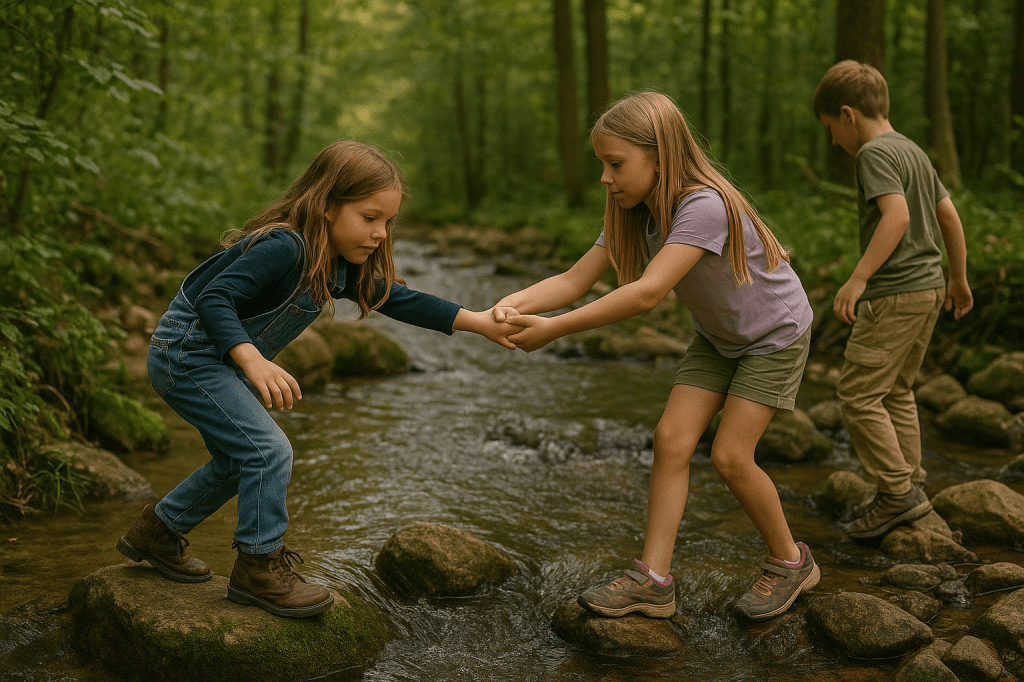
Climbing rocks, crossing streams, and building forts involve calculated risks. Through outdoor play, children learn to assess danger, make decisions, and deal with minor failures—such as falling, getting dirty, or not reaching the top of the tree. These experiences build resilience, encourage problem-solving, and help children manage anxiety. They develop confidence through action: “I tried, I fell, I tried again, and I made it.”
In a world where children are often shielded from failure, nature becomes a teacher of persistence and courage.
—
4. Imagination and Creativity Unleashed
Nature does not come with instructions, flashing lights, or rules. A stick can become a magic wand, a sword, a fishing rod, or the mast of a ship. A cluster of rocks can be a kitchen, a city, or an alien planet. Without structured toys or screens dictating the play, children rely on their imagination to create narratives, solve problems, and build their own worlds. This kind of play strengthens creativity, abstract thinking, and story-building—skills foundational to later success in school and life.
—
5. Emotional Regulation and Mental Health
Outdoor play in nature helps children regulate emotions. The quiet, rhythmic sounds of rustling leaves or flowing water have a calming effect. Natural settings reduce cortisol levels (the stress hormone) and increase serotonin and dopamine, which contribute to happiness and emotional balance.
Children who play outside regularly tend to be more independent, self-reliant, and capable of managing big feelings. Time in nature can also reduce symptoms of anxiety and depression—even in very young children.
—
6. Social Skills and Cooperation
The playground of the natural world fosters social learning. Building a fort, playing hide-and-seek in the woods, or pretending to survive on a desert island all require negotiation, teamwork, leadership, and compromise.
Without adult-led structure, children learn to organize their own games, resolve conflicts, and create fair rules. These peer-based social interactions teach empathy, listening skills, and emotional intelligence in ways that structured settings sometimes can’t.
—
7. Connection to the Environment and Stewardship
Children who play in nature develop a deeper respect and understanding for the environment. They see themselves as part of the natural world—not separate from it.
This connection encourages environmental responsibility from a young age. Children who learn to love the earth are more likely to care for it. They notice changes in the seasons, observe the behavior of animals and insects, and ask questions that spark a lifelong curiosity about the natural world.
Outdoor play is, in many ways, the foundation of environmental education.
—
8. Language and Cognitive Development
Exploring nature enriches vocabulary and boosts curiosity. A child discovering a ladybug or watching clouds form shapes learns new words, asks questions, and develops observation skills.
Outdoor settings prompt descriptive language: “The sky is bright orange,” “The bark is rough,” “The water feels cold.” These rich sensory experiences build more than just language—they create neural connections and cognitive flexibility. Children learn through their senses, and nature provides a sensory playground.
—
9. Freedom from Over-Scheduling and Academic Pressure
Modern childhood is often filled with scheduled activities, lessons, and performance-based tasks. Outdoor play provides a rare space without performance expectations. There’s no one grading your leaf collection or judging your mud pie.
This freedom allows for true self-expression and self-direction. It creates a buffer against the stress of modern childhood and lets kids just be kids. It’s in these moments—when they follow their curiosity, make their own rules, and discover their personal interests—that real development happens.
—
10. Nature for All Ages and Abilities
One of the best aspects of outdoor play is that it’s inclusive. Children of all backgrounds, ages, and abilities can benefit. Whether it’s a toddler collecting leaves in a park or a teenager hiking a forest trail, nature meets each child where they are.
For children with special needs, nature can be a soothing and welcoming space. Sensory-friendly outdoor areas, nature-based therapy, and simple unstructured time outside can support various developmental goals without pressure.
—
Practical Tips for Parents and Educators
Here’s how you can incorporate more nature into your child’s life—even if you live in an urban environment:
Daily Outdoor Time: Aim for at least 1–2 hours outside each day, even if it’s just in the backyard or a local park.
Let It Be Unstructured: Avoid directing their play too much—let them explore freely.
Dress for the Weather: With proper clothing, children can play outside year-round.
Explore Different Environments: Parks, forests, riversides, fields—even urban green rooftops count.
Bring Tools for Discovery: Magnifying glasses, bug jars, notebooks, or binoculars can add to the experience.
Model Curiosity: Ask questions like “What do you think made that trail?” or “Why do you think this leaf is shaped this way?”
Don’t Fear the Mess: Muddy shoes and scraped knees are part of the learning process.
—
Conclusion: Nature as the Ultimate Teacher
Nature doesn’t follow a curriculum, yet it teaches some of the most important lessons in life: resilience, wonder, patience, responsibility, and connection. Outdoor play helps children develop in ways that indoor environments simply can’t replicate.
As parents, educators, and caregivers, our role is to provide access, encouragement, and the freedom to explore. The natural world is waiting—and it’s one of the greatest gifts we can offer our children.
Let them run. Let them dig. Let them wonder.
Because every rock turned, every puddle jumped, and every bug examined teaches something far more valuable than a textbook ever could.





 Bright Minds Journey
Leave a comment