
Music has long been a part of human culture, from ancient tribal rhythms to classical masterpieces and modern pop songs. For children, music is not only a source of joy and entertainment—it is also a powerful tool that supports growth in many areas. Studies increasingly show that exposure to music in early childhood can significantly enhance cognitive development, emotional well-being, and social skills. But how exactly does this work? Let’s explore the many ways music can shape a child’s mind and relationships.
—
1. Music and Brain Development
One of the most well-documented effects of music on children is its role in cognitive development. When children engage with music—whether by listening, singing, or playing instruments—their brains are stimulated in complex and beneficial ways.
Boosting Memory and Attention
Music helps children develop memory and attention span. Learning lyrics or remembering a melody engages memory pathways. Rhythm, in particular, supports auditory processing and pattern recognition. Children who study music often show improved short-term and long-term memory, which supports academic performance.
Enhancing Language Skills
Musical activities support language development, especially in preschoolers. Songs expose children to new vocabulary, rhymes, and sentence structures. Singing and listening to music improve phonological awareness, which is the foundation of reading skills. Bilingual children may benefit even more, as musical rhythm helps them distinguish between the sounds of different languages.
Stimulating Mathematical Thinking
There’s a strong connection between music and math. Musical concepts like rhythm, beat, and tempo require counting, patterning, and timing—core mathematical skills. Music training improves spatial-temporal reasoning, which helps children understand how objects move and relate in space, a skill crucial for math and science learning.
—
2. Music and Emotional Development
Children often experience big emotions that they don’t yet know how to express. Music offers a safe and creative outlet for processing feelings and developing emotional intelligence.
Expressing and Regulating Emotions
Music gives children words and melodies to express emotions such as joy, sadness, or anger. Lullabies soothe anxiety, while upbeat songs energize and inspire. Learning to identify how music makes them feel helps children recognize their own emotions and develop emotional regulation.
Building Confidence and Self-Esteem
Singing in front of others or learning to play an instrument gives children a sense of achievement. Performing—even in small, informal settings—can boost confidence and encourage a positive self-image. It also teaches resilience, as children must practice, make mistakes, and try again.
Promoting Relaxation and Focus
Soft background music or calming classical pieces can reduce stress and help children concentrate during quiet activities like drawing, studying, or bedtime routines. This fosters mindfulness and creates a calm environment conducive to learning and relaxation.
—
3. Music and Social Development
Music is naturally social. It connects people across cultures and generations. For children, engaging with music in group settings builds essential social and interpersonal skills.
Encouraging Cooperation and Teamwork
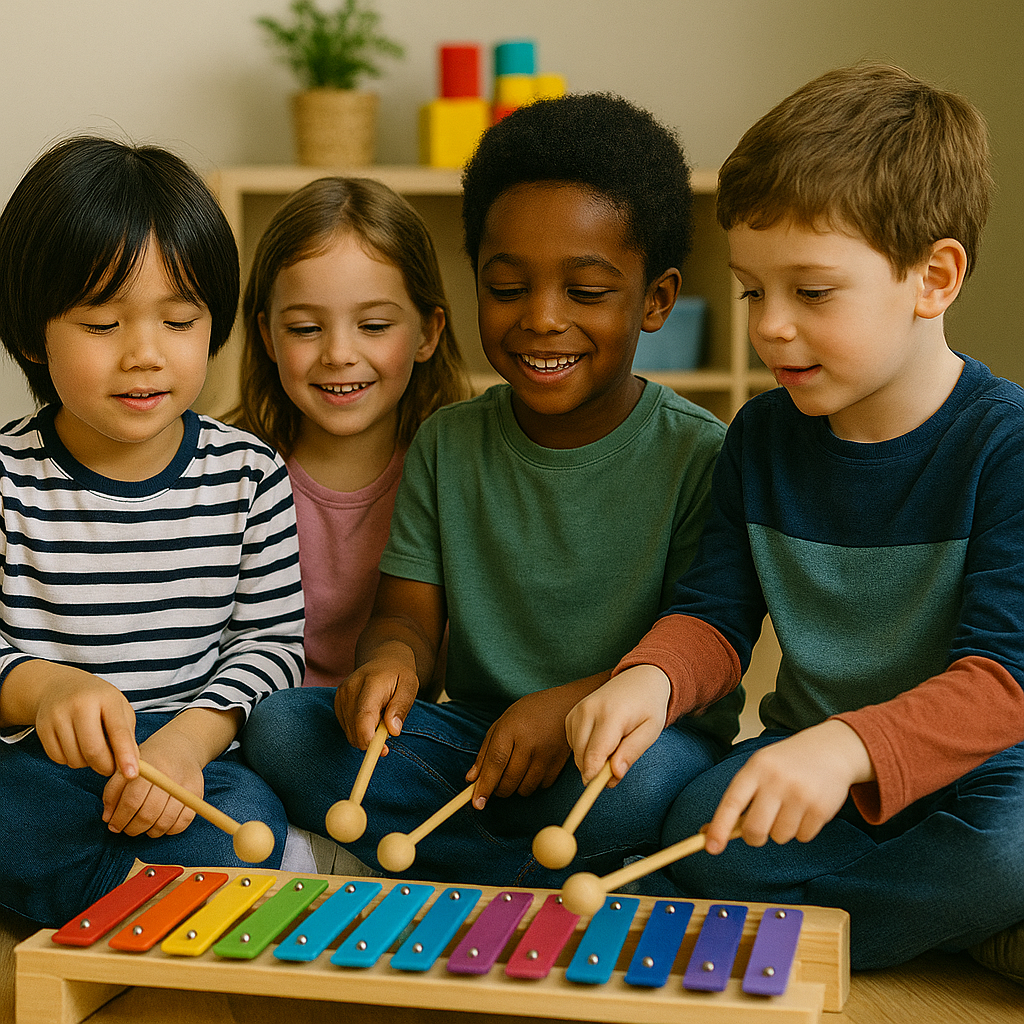
Group music activities—such as choirs, drum circles, or music classes—teach children to listen, take turns, and coordinate with others. Playing in rhythm with peers requires collaboration and attention, helping children learn how to work together toward a common goal.
Fostering Empathy and Connection
Through songs and stories, children are introduced to diverse perspectives and emotions. They begin to understand what others might feel and experience. Participating in shared musical experiences strengthens bonds with family members, teachers, and classmates, reinforcing a sense of belonging.
Improving Communication Skills
Singing, dancing, and engaging in musical games enhance non-verbal communication and body awareness. These experiences are particularly helpful for shy children or those with speech delays, as music creates a low-pressure environment where they can express themselves freely.
—
4. Music for Children with Special Needs
Music is especially valuable for children with special educational needs, such as autism, ADHD, or developmental delays. It can break communication barriers and create positive learning experiences.
Music Therapy Benefits
Certified music therapists use structured music activities to support children’s goals in motor skills, language, and behavior. Music therapy helps non-verbal children communicate, provides sensory input in a manageable way, and fosters calm in overstimulated environments.
Inclusivity and Accessibility
Unlike many activities that require verbal or physical ability, music can be adapted for all children. Whether tapping a drum, humming a tune, or moving to a rhythm, every child can participate at their own level. This makes music a powerful tool for inclusion and self-expression.
—
5. Practical Tips for Parents and Educators
Introducing music into a child’s daily life doesn’t require expensive instruments or formal lessons. Here are some simple, effective ways to use music to support development:
Create a Musical Routine: Use specific songs for waking up, cleaning up, or bedtime to provide structure and transitions.
Sing Together: Make singing a shared activity during car rides, playtime, or chores.
Explore Instruments: Offer simple instruments like shakers, tambourines, or xylophones for open-ended play.
Dance and Move: Encourage children to move freely to different styles of music. Movement supports motor skills and body coordination.
Listen Actively: Play a variety of genres and ask open-ended questions like “How does this song make you feel?” or “What instruments do you hear?”
Attend Live Music Events: Local performances and family concerts create memorable experiences and expose children to diverse musical styles.
—
6. Integrating Music into Learning Activities
Music can be seamlessly woven into everyday learning:
Alphabet Songs: Help with letter recognition and phonics.
Counting Rhymes: Reinforce number concepts and sequences.
Science Songs: Teach about the planets, weather, or the human body.
Storytelling with Music: Combine music with narratives to boost imagination and comprehension.
Children are more likely to remember facts and concepts when they are associated with catchy melodies or engaging rhythms.
—
Conclusion: A Lifelong Gift
Music offers children much more than entertainment. It nurtures brain development, builds emotional intelligence, and cultivates strong social skills. From lullabies at bedtime to group songs at school, music is a natural and joyful way to support a child’s growth.
Whether you’re a parent, teacher, or caregiver, incorporating music into everyday life is one of the most enriching gifts you can offer. No matter the child’s background, learning style, or abilities, music meets them where they are—and helps them go further.




 Bright Minds Journey
Leave a comment