
Cooking is a daily activity that brings families together, nourishes the body, and creates lasting memories. While it might seem easier to keep children away from the hustle and bustle of the kitchen, involving them in cooking has many benefits that go far beyond preparing a meal. Whether your child is a toddler helping to mix ingredients or an older child following a recipe step by step, there are countless reasons why letting kids into the kitchen is a great idea.
In this article, we’ll explore the emotional, cognitive, social, and practical benefits of cooking with children, offer tips for making it a safe and enjoyable experience, and suggest age-appropriate tasks to help you get started.
—
1. Cooking Builds Stronger Bonds
One of the most beautiful aspects of cooking with children is the opportunity it offers to spend quality time together. In our busy modern lives, shared moments like these are precious. Preparing food as a team encourages communication, laughter, cooperation, and storytelling. These experiences create cherished memories that children may carry into adulthood, and even pass on to the next generation.
Working together in the kitchen fosters a sense of togetherness and helps build a stronger family connection. It’s not just about the final dish – it’s about the time spent creating something meaningful as a team.
—
2. It Encourages Healthy Eating Habits
Children who participate in cooking are more likely to try new foods and develop healthier eating habits. When they see how meals are prepared and take part in selecting ingredients, they become more curious and open to different tastes, textures, and food groups.
They might discover that vegetables aren’t so scary after all when they’re the ones who chopped the carrots or stirred the soup. Cooking with kids helps build a positive relationship with food and reduces mealtime struggles, especially with picky eaters.
You can also use cooking time as a chance to talk about nutrition, balance, and where food comes from. It’s a natural way to introduce topics like portion control and food variety without making it feel like a lesson.
—
3. Cooking Develops Practical Life Skills
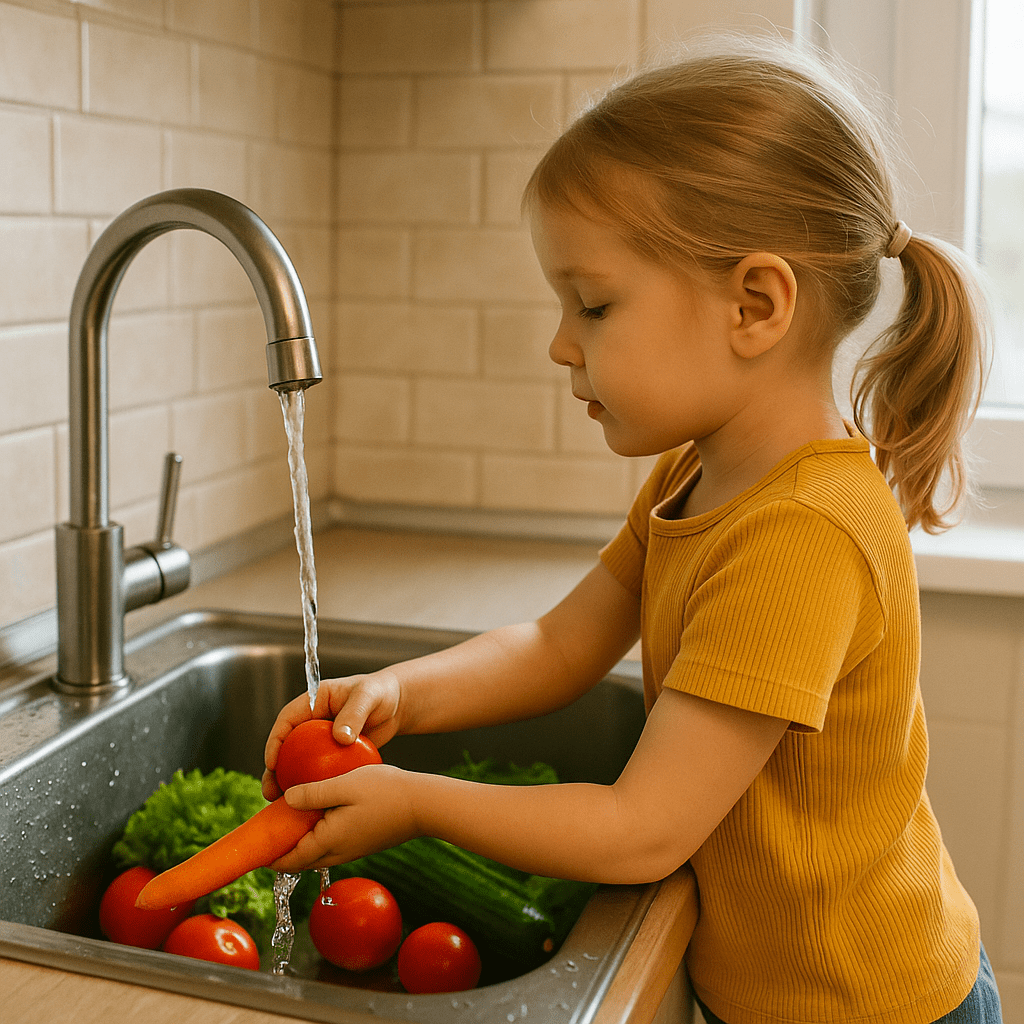
Cooking is an essential life skill. By learning how to prepare meals, children gain confidence in the kitchen and grow more independent. Even basic tasks like washing vegetables, measuring ingredients, or cracking an egg teach responsibility and build competence.
These skills will serve them well in adulthood. Young people who know how to cook are less likely to rely on fast food or processed meals, which often lack nutritional value. They also develop a sense of self-reliance and resourcefulness.
—
4. It Enhances Math and Science Learning
Cooking is a real-world opportunity to practice math and science in action. Measuring flour, counting spoonfuls, dividing recipes, and timing the baking process all reinforce important mathematical concepts.
Science is naturally embedded in cooking, too. Children learn about chemical reactions when baking, observe how heat changes substances, and explore textures, colors, and smells. It’s a hands-on lab – no textbook required!
These experiences support academic development in a fun, engaging, and meaningful way. Kids often absorb more when they’re actively doing, rather than passively learning.
—
5. It Sparks Creativity and Decision-Making
Cooking offers endless chances to be creative. Children can choose flavors, decorate cookies, shape dough, or invent their own recipes. This helps them express themselves and develop a sense of pride in their creations.
It also supports decision-making skills. Should we use cinnamon or vanilla? Do we need more salt? What can we substitute if we don’t have eggs? These small choices teach problem-solving and help children feel like their opinions matter.
—
6. It Boosts Confidence and Self-Esteem
There’s something deeply satisfying about making something from scratch. When children see a finished dish that they helped create, it gives them a sense of accomplishment. This boosts confidence and self-esteem.
You can celebrate their efforts, no matter how small. Praising a well-mixed batter or a carefully peeled carrot shows children that their contributions are valuable. Even if the result isn’t perfect, the effort and learning are what count.
—
7. Cooking Supports Language Development
Following a recipe, naming ingredients, describing what they’re doing – all of these build vocabulary and communication skills. Cooking together gives children the chance to ask questions, follow instructions, and practice listening.
For bilingual families, the kitchen is also a great place to introduce or reinforce a second language. Naming items in both languages or singing cooking-related songs can turn meal prep into a fun language-learning activity.
—
8. It Teaches Patience and Focus
Cooking isn’t always quick, and that’s a good thing. Children learn to follow steps in sequence, wait for things to bake or boil, and focus on tasks one at a time. These are valuable life skills in a world that often encourages speed and distraction.
Working in the kitchen helps improve attention span and persistence. Kids must stay engaged from start to finish, which strengthens executive functioning and emotional regulation.
—
9. It Encourages Cultural Awareness
Food is a reflection of culture. When children cook meals from different countries or family traditions, they learn about heritage, diversity, and the importance of customs. This can deepen their appreciation for different cultures and make them more open-minded.
Cooking a recipe from another culture can be a meaningful way to celebrate holidays, explore global cuisine, or talk about family history. It’s a delicious form of education that helps children become more globally aware.
—
10. It Can Be a Source of Joy and Mindfulness
Last but not least, cooking can simply be fun. Stirring, kneading, decorating – these sensory-rich experiences offer joy and satisfaction. For many children (and adults), cooking is a calming activity that brings a sense of order and peace.
It encourages mindfulness by keeping kids in the present moment. They learn to pay attention to textures, smells, and timing – all of which support emotional regulation and reduce anxiety.
—
Tips for Cooking With Kids
While the benefits are clear, it’s important to make the experience enjoyable and safe. Here are some tips to help things go smoothly:
Start small: Choose simple recipes with few steps. Think fruit salad, sandwiches, or muffins.
Embrace the mess: It won’t be perfect, and that’s okay. Lay down a towel or apron and let them explore.
Assign age-appropriate tasks: Toddlers can stir or wash vegetables, while older kids can measure or chop (with supervision).
Teach safety: Use each cooking session to talk about hot surfaces, sharp tools, and hygiene.
Be patient: Cooking with children takes longer. Enjoy the process, not just the product.
Celebrate their effort: Take a photo, write down the recipe, or have a “chef of the day” award to honor their work.
—
Age-Appropriate Tasks by Age Group
Here are a few task suggestions depending on your child’s age:
Toddlers (2–3 years):
Washing fruits and vegetables
Pouring pre-measured ingredients
Stirring with a spoon
Tearing salad leaves
Preschoolers (4–5 years):
Spreading butter or cream cheese
Mixing batter
Cracking eggs (with help)
Using cookie cutters
Early Elementary (6–8 years):
Reading simple recipes aloud
Measuring ingredients
Peeling with a child-safe peeler
Making sandwiches or simple salads
Older Children (9–12 years):
Following recipes independently
Using a knife with supervision
Cooking on the stovetop (with guidance)
Planning a meal from start to finish
—
Final Thoughts
Involving children in cooking isn’t just about food. It’s about connection, education, empowerment, and joy. From boosting confidence to building life skills, the kitchen is one of the best places for kids to learn and grow. And best of all? You get to enjoy a meal together when it’s done.
So next time you’re making dinner or baking a treat, invite your child to join in. You might be surprised at how much they enjoy it – and how much they learn along the way.



 Bright Minds Journey
Leave a comment