
Welcoming a pet into your home is a joyful and often life-changing decision—especially when children are involved. A pet can teach your child about responsibility, empathy, routine, and unconditional love. But choosing the right first pet is key to ensuring a positive experience for the entire family.
In this blog post, we’ll explore how to choose the best pet for your child, what factors to consider, and which animals tend to be most suitable for young families.
—
1. Why Getting a Pet Can Be Great for Kids
Before diving into which pet to choose, it’s worth recognizing the benefits pets can offer children:
Emotional development: Pets help children understand emotions like love, patience, and loss.
Responsibility: Caring for a pet fosters a sense of duty and daily routine.
Social skills: Interacting with animals can build confidence and empathy.
Physical activity: Pets like dogs encourage more outdoor play and movement.
Stress relief: Stroking a pet or spending quiet time together can be calming and therapeutic.
However, these benefits only unfold if the pet suits the family’s lifestyle and the child’s readiness.
—
2. Things to Consider Before Choosing a Pet
a) Your Child’s Age and Maturity
Toddlers (1–3) often enjoy watching pets but can’t take on responsibilities.
Preschoolers (4–5) may help with feeding or brushing under supervision.
School-aged kids (6–9) can take on simple tasks like cleaning cages or walking a small dog with guidance.
Not all children are ready for the same level of responsibility, and maturity matters more than age alone.
b) Family Lifestyle
Ask yourself:
Do you have time for daily walks, cleaning, or training?
Do you travel often or have unpredictable work hours?
How much space do you have indoors or outdoors?
Different pets require different levels of time, space, and energy.
c) Allergies and Health Conditions
Before choosing a pet, consider allergy testing if anyone in the family has sensitivities. Also think about noise levels, fur shedding, and hygiene needs—especially if your child has asthma or other health concerns.
d) Cost and Long-Term Commitment
Pets cost money—not only to buy, but also to feed, vaccinate, and care for. Some animals, like parrots or turtles, can live for decades! Be realistic about your long-term capacity and budget.
—
3. Popular First Pets for Children: Pros and Cons
Here’s a quick guide to some of the most popular beginner pets:
—
🐶 Dogs
Pros: Loyal, interactive, great for active kids
Cons: High time commitment, need for training and walking
Best for: Families with outdoor space and time for daily care
—
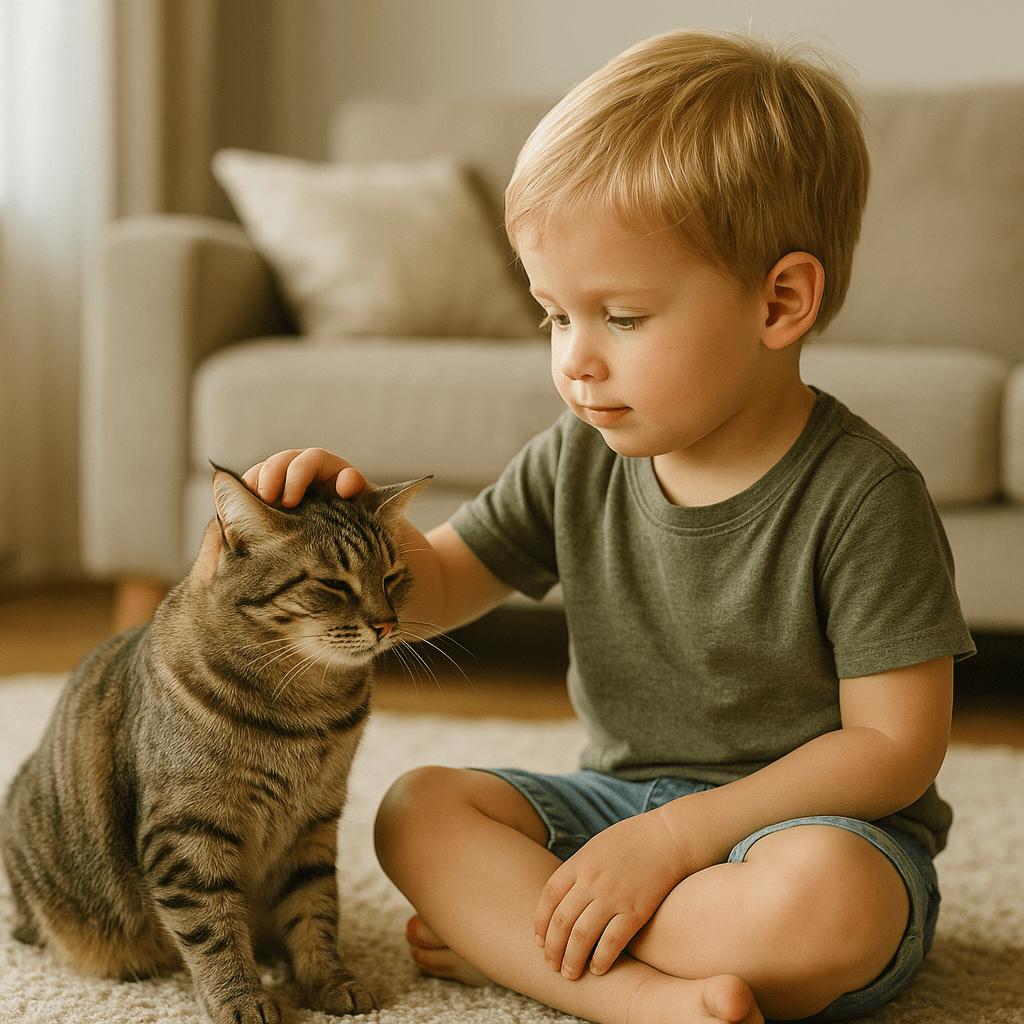
🐱 Cats
Pros: Independent, clean, playful but lower maintenance than dogs
Cons: Can be aloof, may scratch, litter box cleaning needed
Best for: Families wanting a calmer pet experience
—
🐹 Hamsters or Gerbils
Pros: Small space needed, relatively low cost
Cons: Nocturnal, fragile (not ideal for very young children)
Best for: School-aged kids with adult supervision
—
🐠 Fish
Pros: Visually calming, minimal interaction needed
Cons: Water maintenance can be tricky, limited bonding
Best for: Very young children or busy families
—
🐦 Birds (Budgies, Canaries)
Pros: Vocal, social, some can learn tricks
Cons: Can be noisy, need regular cage cleaning and mental stimulation
Best for: Families with time and patience for daily interaction
—
🐢 Turtles
Pros: Quiet, unique, can live a long time
Cons: Require special habitat and hygiene; salmonella risk for young kids
Best for: Older kids who enjoy observing over cuddling
—
4. Matching the Pet to Your Child’s Personality
Every child is different—so match your pet choice to your child’s nature:
Shy or anxious child? A calm cat or a guinea pig might be soothing.
Energetic and outdoorsy? A dog could be the perfect buddy.
Curious and observant? Consider fish or reptiles that can be studied quietly.
It’s also helpful to talk about the animal’s needs and test your child’s interest by visiting a pet shelter, zoo, or friend with pets.
—
5. Involve Your Child in the Process
When possible, involve your child in choosing and preparing for the pet. This builds excitement and a sense of ownership. Let them:
Help choose the pet’s name
Design a feeding or care chart
Pick out toys, bedding, or accessories
Learn basic animal care facts before the pet arrives
Creating a printable “Pet Care Responsibility Chart” can be a fun way to begin the journey together.
—
6. Start Small and Build From There
If you’re unsure whether your child is truly ready, start with a lower-maintenance animal. You can always build up to a more complex pet later.
And remember: every animal deserves care and love, not just the ones we call “starter pets.” Avoid getting pets impulsively or as “temporary” trials.
—
7. Final Thoughts: A Pet Is a Family Member
Getting a pet should never be just a gift for a child—it’s a new family member. Choosing the right one with care and thought helps your child grow emotionally and teaches lifelong values.
With the right planning, your child’s first pet can become a beloved companion and treasured memory.
—
💡 Bonus tip:
Want to keep track of daily pet care tasks? Download our free printable “My Pet Care Chart” from the blog and help your child stay organized while bonding with their furry friend!





 Bright Minds Journey
Leave a comment