
Introduction
Every year, as the leaves begin to fall and the air turns crisp, children around the world eagerly anticipate one special day: Halloween. For many adults, Halloween is a nostalgic holiday filled with memories of costumes, candy, and neighborhood adventures. For kids, however, it is pure magic. It is a time when their imaginations can run wild, their creativity blossoms, and they feel part of something bigger than themselves.
So, what makes Halloween so special for children? Why do they wait with such excitement for October 31st? The answer lies in a combination of costumes, imagination, community, and simple joy.
—
The Magic of Costumes
Perhaps the most obvious reason children adore Halloween is the opportunity to wear costumes. Dressing up transforms them into someone—or something—else for a night.
Costumes are more than just fabric and accessories. For a child, a costume is an open door to another identity. A shy child might suddenly feel bold while wearing a superhero outfit. A child fascinated by animals might become a roaring lion or a fluttering butterfly. Costumes allow kids to step into roles that give them confidence and encourage role-play.
Psychologists often note that dress-up play supports social and emotional growth. By taking on different roles, children learn empathy and experiment with different perspectives. Halloween gives them permission to explore these identities not just at home but in a larger social setting.
—
Imagination Unleashed
Halloween is a holiday fueled by imagination. The decorations, the stories, and the entire atmosphere of the season invite kids to dream beyond their everyday world.
Spooky but playful themes—glowing pumpkins, friendly ghosts, silly skeletons—let children experience “scary” ideas in a safe way. They know that the witches and monsters around them are pretend, and that makes the experience thrilling but not threatening. It is the perfect balance of excitement and comfort.
For many kids, Halloween is a stage where their creativity can shine. From designing their own costumes to coming up with stories about who or what they are, they are practicing storytelling, problem-solving, and innovation. Imagination is not just entertained on Halloween; it is celebrated.
—
Community and Family Traditions
Halloween is also one of the most social holidays for children. Unlike birthdays or personal milestones, Halloween is shared with neighbors, classmates, and entire communities.
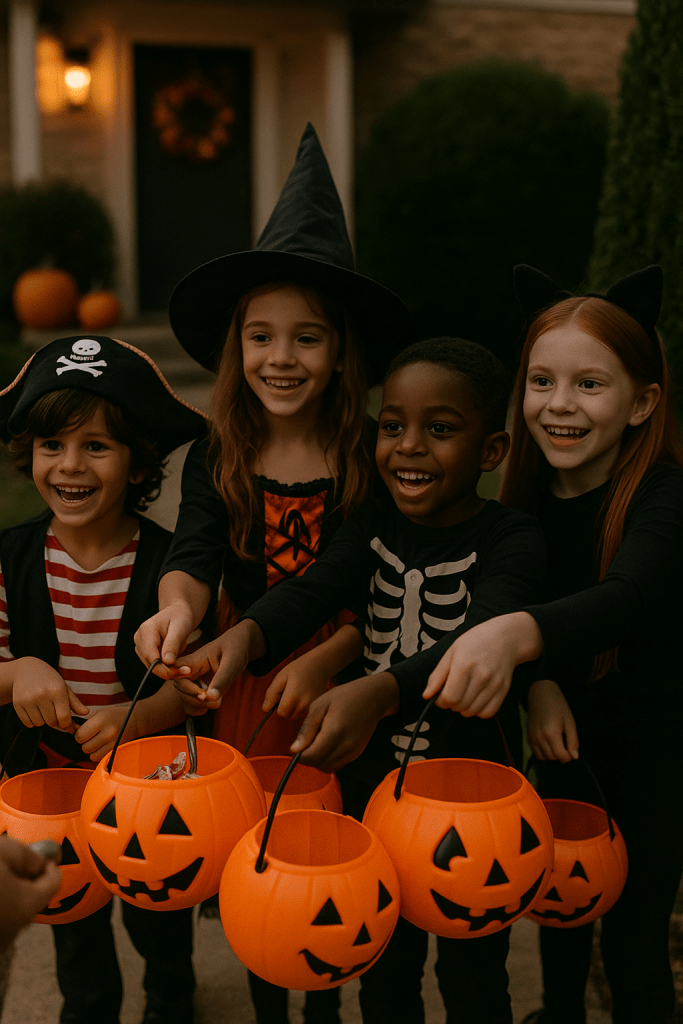
Trick-or-treating, for example, is not just about collecting candy. It is a ritual of connection. Kids knock on doors, say their playful phrase, and are rewarded not only with sweets but also with smiles and recognition. For many, this may be the only night of the year when they explore their neighborhoods so freely.
Family traditions also play a huge role. Some families carve pumpkins together, while others enjoy watching a favorite Halloween movie marathon. These activities become cherished rituals that children look forward to year after year. Through these traditions, Halloween creates lasting memories that bind families closer.
—
The Sweet Side of Halloween
Of course, we cannot forget the candy. To a child, Halloween is the ultimate treasure hunt. The promise of a bucket full of chocolates, lollipops, and gummies adds an extra sparkle to the night.
But beyond the sugar rush, there is something deeply joyful about the anticipation itself. Kids plan their routes, compare their collections, and even learn the basics of sharing and trading with siblings and friends. This exchange of sweets, though simple, is also a lesson in community, generosity, and sometimes patience (especially when parents suggest saving candy for later).
The sweets of Halloween are not just about indulgence—they represent rewards for bravery, creativity, and participation.
—
Halloween and Emotional Growth
One of the less obvious but equally important aspects of Halloween is its role in emotional development. Children naturally experience fears as they grow. They may worry about the dark, about monsters, or about being alone. Halloween provides a playful environment where these fears are acknowledged but transformed into fun.
By facing “scary” themes in a safe and controlled way, children gain confidence. They learn that darkness can hold glowing pumpkins, that monsters can be funny, and that ghosts might actually be friendly. These playful reinterpretations help kids process fear in ways that empower them rather than overwhelm them.
Parents often notice that Halloween allows children to feel brave. Marching down a dark street in costume or knocking on a stranger’s door for candy requires courage. That courage, even in small doses, is a valuable part of growing up.
—
The Joy of Storytelling and Play
Another reason kids adore Halloween is the storytelling that surrounds it. Every costume comes with a narrative. A pirate is off to find treasure, a fairy sprinkles magic dust, a robot explores distant planets. Children often create entire adventures around their chosen characters, extending the magic of Halloween far beyond one night.
Halloween also gives kids permission to blur the lines between reality and fantasy. They know they are not truly superheroes or witches, but pretending is half the fun. This balance—where they can play at being someone else while knowing it is temporary—is a unique developmental experience.
—
Halloween Through a Child’s Eyes
To understand why kids love Halloween, it helps to see it from their perspective. Imagine being six years old and stepping outside on Halloween night. The air is cool, the streets are glowing with jack-o’-lanterns, and every corner seems alive with possibility.
You are wearing a costume you chose, and people recognize it. Strangers smile and offer you treats simply because you said “trick or treat.” Your friends are beside you, equally excited, and the whole world feels transformed. It is not just another evening—it is an adventure.
That sense of wonder is at the heart of why Halloween is so beloved.
—
A Global Celebration of Creativity
Though Halloween has its roots in Celtic traditions and grew popular in the United States, today it is celebrated around the world. Children in many countries dress up, attend parties, and enjoy the spirit of playfulness the holiday brings.
While customs differ—some countries focus on costume parties rather than trick-or-treating, and others blend Halloween with local traditions—the core appeal remains the same. For children everywhere, Halloween is a time when creativity, community, and joy converge.
—
Conclusion
Halloween is more than costumes and candy. For children, it is a magical celebration of imagination, bravery, and belonging. It is a night when they can step into new roles, face their fears with laughter, and create memories with family and friends.
When we look at Halloween through a child’s eyes, we see why it holds such a special place in their hearts. It is not just about pretending to be someone else—it is about discovering new sides of themselves.
So, the next time you see a group of kids running down the street in costumes, buckets of candy swinging in hand, remember: you are witnessing more than just a holiday. You are witnessing the magic of childhood imagination in full bloom.


 Bright Minds Journey
Leave a comment