Introduction
The holiday season is a magical time for children — late nights, special treats, family visits, and a break from everyday routines. Christmas, winter break, and New Year celebrations bring joy, but once everything slows down, many parents notice the same challenge: getting back into normal daily life feels harder than expected.
Children may struggle with sleep, focus, emotions, or motivation, while parents feel pressure to “get things back on track” quickly. The good news is that returning to everyday routines doesn’t have to be stressful. With a gentle, supportive approach, children can smoothly transition back into their usual rhythm.
In this article, we’ll explore simple, realistic ways to help children — and parents — ease back into everyday routines after the holidays.
1. Why Transitions Are Hard for Children
For children, routines provide safety and predictability. During the holidays, those structures often disappear. Bedtimes shift, meals change, and daily schedules become flexible — which is exciting, but also overwhelming.
After weeks of freedom, suddenly returning to rules, school schedules, and expectations can feel like a shock. Children may show this through:
- increased emotional sensitivity
- difficulty sleeping
- resistance to routines
- lack of focus or motivation
Understanding that these reactions are normal helps parents approach the transition with patience instead of frustration.
2. Start with Small, Predictable Steps
Instead of changing everything at once, focus on rebuilding routines gradually. Small, predictable steps help children regain a sense of control.
Some simple ways to start:
- Move bedtime earlier by 10–15 minutes each night
- Reintroduce morning routines step by step
- Bring back regular meal times
- Set clear, calm expectations for the day
Consistency matters more than perfection. Even imperfect routines create emotional safety.
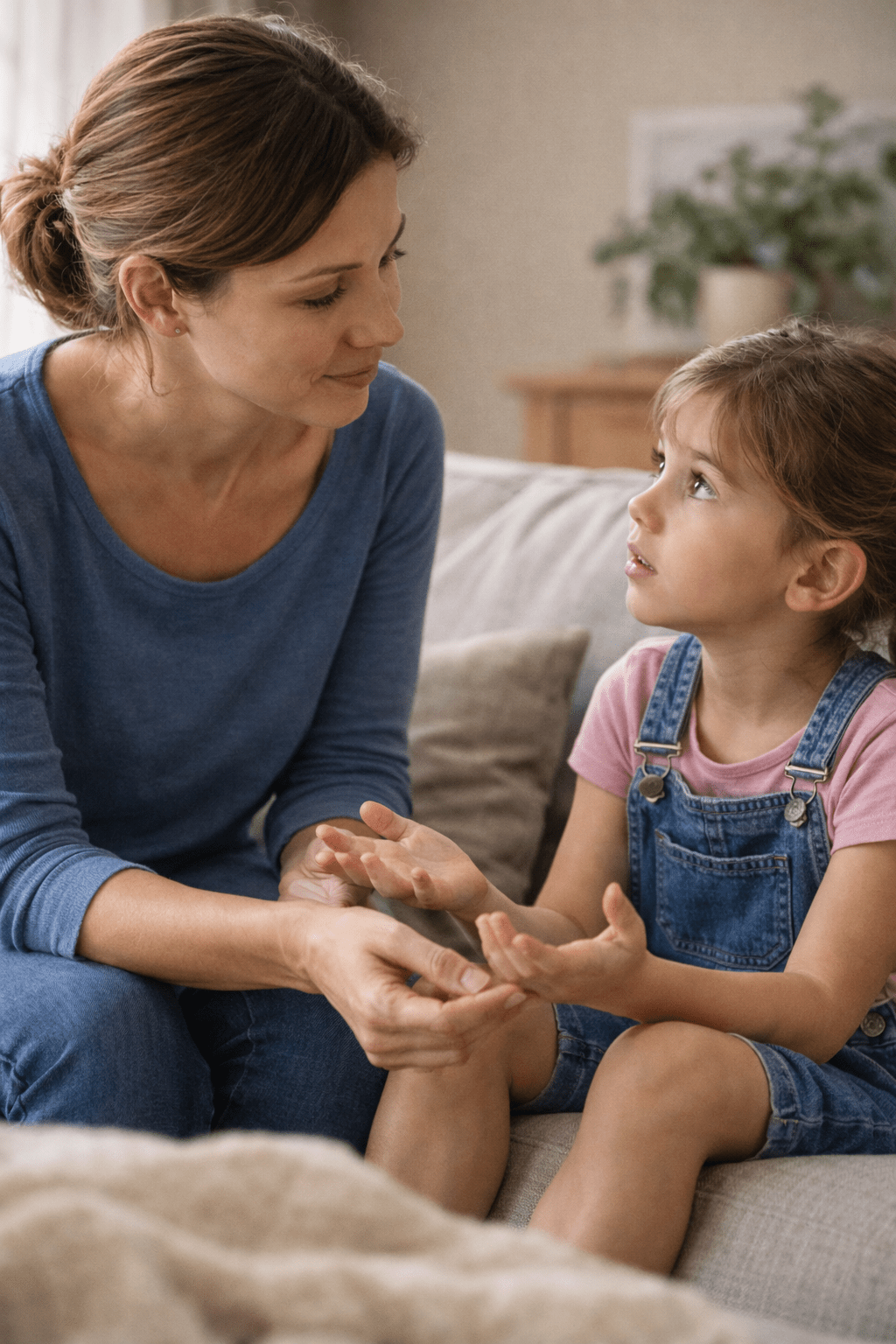
3. Talk About the Change — Gently
Children benefit from knowing what to expect. Talking openly about returning to everyday life helps reduce anxiety.
Try phrases like:
- “Soon we’ll go back to our school days, and I’ll help you with the mornings.”
- “The holidays were fun, and now we’re slowly going back to our usual rhythm.”
- “It’s okay if it feels a little strange at first.”
Giving children space to share their feelings — excitement, sadness, or worry — helps them feel understood rather than pressured.
4. Rebuild Calm Mornings and Evenings
Mornings and evenings are often the most challenging after a long break. Focusing on these two parts of the day can make a big difference.
For calmer mornings:
- Wake up a little earlier to avoid rushing
- Keep mornings quiet and predictable
- Avoid screens right after waking up
For calmer evenings:
- Create a simple evening routine
- Lower lights and noise before bedtime
- Read together or talk about the day
A calm start and end to the day support emotional balance and better sleep.
5. Create a Supportive Home Atmosphere
The environment at home plays a powerful role in how children feel. After the excitement of the holidays, children often need calm, familiar spaces.
Helpful ideas:
- Reduce visual clutter
- Keep play areas organized but accessible
- Create a quiet corner for rest or reading
- Use soft colors and gentle lighting
A calm environment supports concentration, emotional regulation, and a sense of security.
6. Lower Expectations — for Everyone
One of the most important things parents can do is adjust expectations. Children don’t need to “bounce back” immediately — and neither do adults.
It’s okay if:
- routines take time to settle
- emotions feel bigger than usual
- days aren’t perfectly productive
Progress comes from consistency, patience, and understanding, not pressure.
7. Focus on Connection Before Performance
After a busy holiday period, children need reconnection just as much as structure. Spending intentional time together helps rebuild trust and emotional balance.
Simple ways to reconnect:
- talk about favorite holiday memories
- play together without distractions
- read a book side by side
- share quiet moments
When children feel emotionally secure, routines naturally become easier to follow.
8. Moving Forward with Confidence
Returning to everyday life after the holidays isn’t about strict schedules or perfect routines. It’s about creating a supportive rhythm that helps children feel safe, calm, and capable.
By introducing routines gradually, maintaining open communication, and focusing on connection, families can move forward with confidence — one day at a time.
Every new year is a chance for a gentle reset, not a fresh start filled with pressure.
Closing Thoughts
If your home feels a little out of balance after the holidays, you’re not alone. With patience and small, thoughtful steps, everyday life will find its rhythm again — naturally and gently.







 Bright Minds Journey
Leave a comment