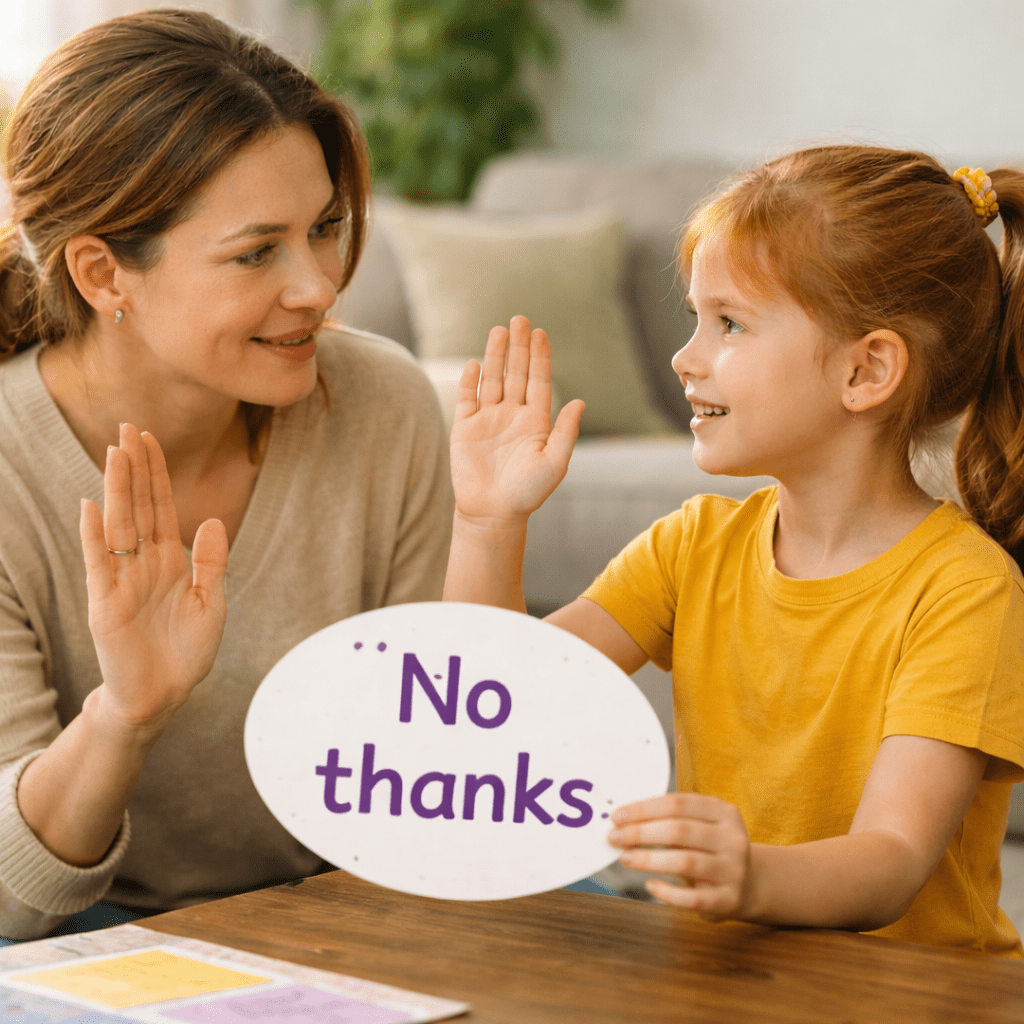
Teaching children to say “no” may sound simple, yet for many parents it feels surprisingly complicated. We want our children to be kind, cooperative, and respectful—but at the same time, we want them to feel safe, confident, and capable of standing up for themselves. Learning when and how to say no is a crucial life skill that supports emotional well-being, healthy relationships, and self-respect from early childhood through adulthood.
In this article, we explore why saying no is so important, how children learn boundaries, and practical ways parents can support this skill in everyday life—without creating conflict or fear.
Why learning to say no matters
Saying no is not about disobedience or selfishness. It is about recognizing personal limits and communicating them clearly. Children who feel allowed to say no in appropriate situations are more likely to:
- Develop healthy self-esteem
- Feel safe expressing their emotions and needs
- Resist peer pressure more effectively
- Build respectful, balanced relationships
- Trust their own feelings and intuition
When children are taught that their feelings and boundaries matter, they learn that they are valued—not only for being “good” or compliant, but for being themselves.
Boundaries begin much earlier than we think
Many people associate boundaries with teenagers or adults, but the foundation is built much earlier. Even toddlers express boundaries naturally—by turning away, saying “no,” crying, or resisting unwanted touch or activities. These early signals are important forms of communication.
When adults consistently override these signals (“Just give a hug,” “Don’t be difficult,” “You have to share”), children may learn that their discomfort is less important than pleasing others. Over time, this can make it harder for them to recognize or defend their own boundaries.
Respecting boundaries does not mean letting children control everything. It means acknowledging their feelings, even when the final decision still belongs to the adult.
The difference between healthy and unhealthy “no”
Not every refusal is the same. Children need guidance to understand when saying no is appropriate and how to do it respectfully.
Healthy reasons for saying no include:
- Feeling uncomfortable or unsafe
- Being overwhelmed or tired
- Wanting personal space
- Disagreeing with something that feels wrong
Unhealthy patterns may appear when:
- “No” is used to avoid every responsibility
- The child lacks tools to express needs calmly
- Boundaries are unclear or inconsistent
Our role as adults is not to silence the “no,” but to help children understand it, refine it, and express it in constructive ways.
Modeling matters more than instructions
Children learn far more from what we do than from what we say. If they see adults constantly ignoring their own limits, apologizing for having needs, or agreeing to things out of guilt, they will internalize the same patterns.
Modeling healthy boundaries can look like:
- Saying, “I need a break right now.”
- Politely declining invitations or requests
- Expressing disagreement calmly and respectfully
- Setting limits without anger or shame
When children observe adults using “no” as a neutral, respectful word, they learn that boundaries are normal—not something to feel guilty about.
Giving children the language of boundaries
Many children struggle to say no simply because they don’t have the words. Helping them find age-appropriate language empowers them to express themselves clearly.
Examples for younger children:
- “I don’t like that.”
- “Please stop.”
- “I need space.”
- “I’m not ready.”
Examples for older children:
- “I don’t feel comfortable with this.”
- “I’d rather not.”
- “That doesn’t work for me.”
- “I need time to think.”
Practicing these phrases through role-play or everyday situations makes them feel natural and accessible when needed.
Creating a safe environment for saying no
Children are more likely to speak up when they feel emotionally safe. This means knowing they won’t be punished, mocked, or dismissed for expressing discomfort.
To build this safety:
- Listen calmly when your child says no
- Avoid shaming language (“Don’t be rude,” “Stop overreacting”)
- Ask follow-up questions instead of reacting immediately
- Validate feelings even if you can’t agree with the request
For example:
“I see that you don’t want to go right now. Can you tell me what feels hard about it?”
This approach teaches children that communication—not silence—is the goal.
Teaching respect alongside boundaries
Learning to say no also involves learning to respect others’ boundaries. Children need to understand that “no” works both ways.
You can support this by:
- Respecting your child’s no when possible
- Pointing out when others say no and why it matters
- Encouraging empathy and perspective-taking
- Teaching that disagreement doesn’t equal rejection
When children experience mutual respect, they learn that boundaries strengthen relationships rather than damage them.
Handling everyday challenges
Sharing and social situations
Forced sharing can send confusing messages. Instead of insisting, try teaching negotiation:
- “You can take turns.”
- “You can say when you’re done.”
- “You can choose something else to play with.”
Physical affection
Allow children to decide how they express affection. Offering alternatives (“High five or wave?”) helps them feel in control without rejecting connection.
Peer pressure
Open conversations about feelings, choices, and consequences prepare children to stand firm in social situations—long before pressure becomes intense.
When children struggle to say no
Some children are naturally more sensitive, eager to please, or fearful of conflict. These children may need extra support.
You can help by:
- Praising effort, not compliance
- Encouraging independent thinking
- Helping them recognize body signals (tension, discomfort)
- Reinforcing that relationships survive honest boundaries
Confidence grows when children feel accepted as they are—not only when they agree.
Saying no as a form of self-respect
Ultimately, teaching children to say no is about teaching them self-respect. It shows them that their feelings matter, their body belongs to them, and their voice deserves to be heard.
This skill will serve them throughout life—in friendships, school, work, and personal relationships. Children who can say no clearly and calmly are not less kind. They are often more compassionate, because they understand both their own limits and those of others.
Final thoughts
Helping children learn to say no is not a single lesson—it is an ongoing process shaped by daily interactions, conversations, and examples. When we respond with patience, curiosity, and respect, we give children something invaluable: the confidence to trust themselves.
By teaching children that “no” is a complete, acceptable sentence, we help them grow into adults who can protect their well-being while staying connected to others.






 Bright Minds Journey
Leave a comment