Modern childhood is often filled with schedules. Music lessons, sports practices, language classes, tutoring sessions—many children move from one organized activity to the next with little unplanned time in between. Structured programs can be valuable and enriching, but when they dominate a child’s daily life, something essential may be missing: free play.
Free play is not wasted time. It is not something children do only when nothing “more useful” is available. In reality, free play is a fundamental part of healthy development, offering experiences that structured activities simply cannot replace. In this article, we explore why free play matters, what children gain from it, and how parents can create a healthy balance between structure and freedom.
What is free play?
Free play is child-led, self-chosen, and open-ended. It has no predefined outcome, no adult-imposed rules, and no performance expectations. Children decide:
- What to play
- How to play
- When to stop or change the game
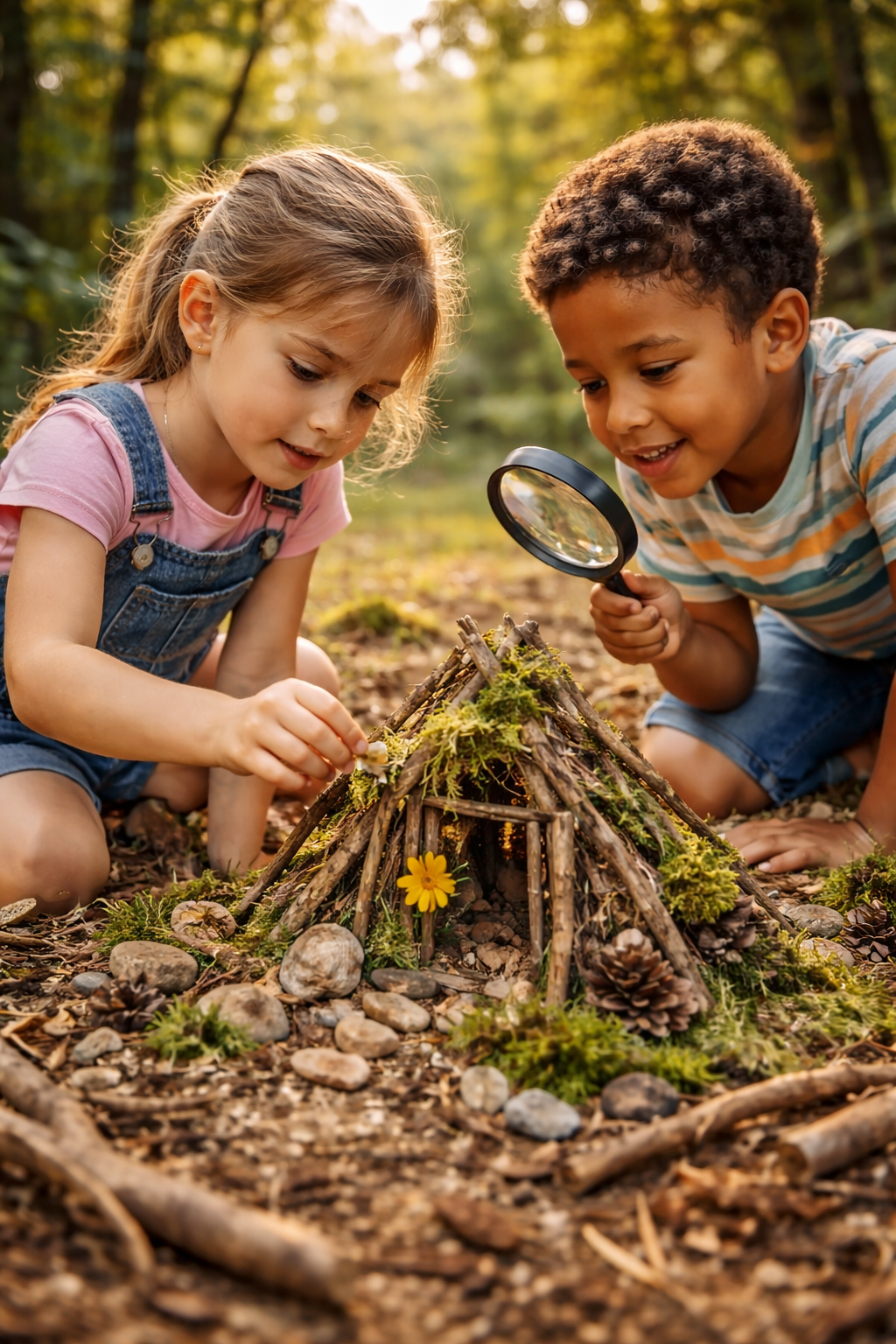
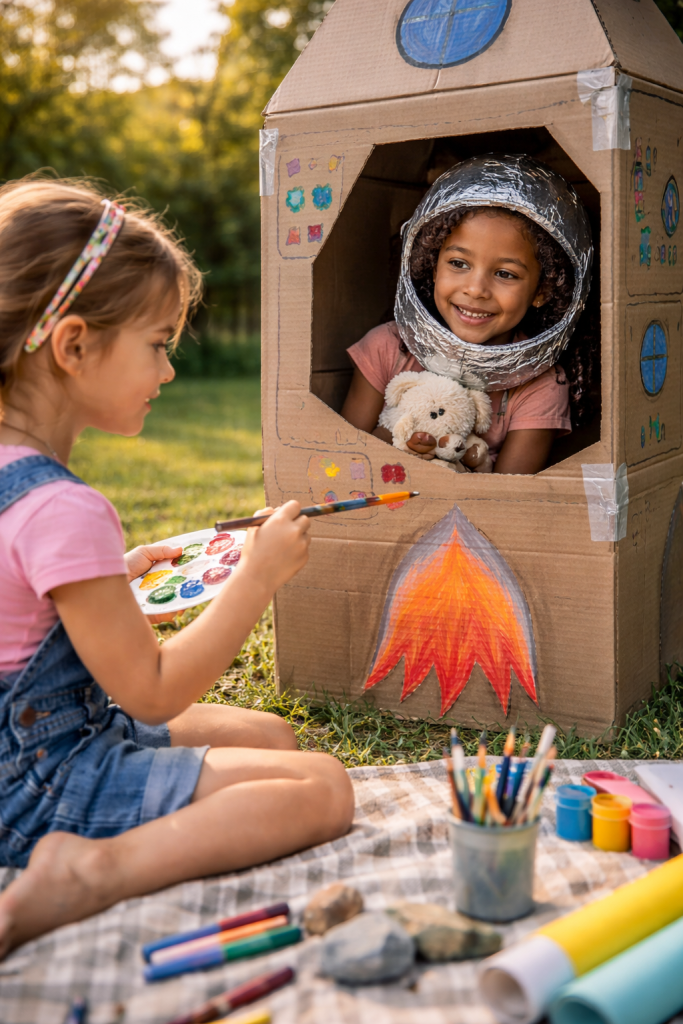
Free play can happen indoors or outdoors, alone or with others, quietly or energetically. It might look like building imaginary worlds, drawing for hours, inventing games, or simply exploring ideas without direction.
What makes free play unique is not the activity itself—but the freedom behind it.
Structured activities have value—but limits
Structured programs offer many benefits. They can help children:
- Learn specific skills
- Develop discipline and perseverance
- Experience teamwork and guidance
- Discover interests and talents
However, structured activities are usually adult-led. Goals, rules, and expectations are set externally. While this can support learning, it does not fully meet a child’s developmental needs on its own.
When children’s days are overly structured, they may:
- Rely too much on external direction
- Struggle with independent decision-making
- Experience pressure to perform
- Have limited space to process emotions
This is where free play becomes essential—not as an alternative, but as a counterbalance.
Free play supports emotional regulation
Children experience a wide range of emotions every day—excitement, frustration, disappointment, joy. Free play offers a natural space to process these feelings.
During unstructured play, children:
- Release stress and tension
- Replay challenging experiences in a safe way
- Explore emotions without needing to explain them
- Regain a sense of control
This emotional processing often happens silently and invisibly, but it plays a crucial role in mental well-being.
Building independence and self-trust
In structured environments, children are often told what to do, when to do it, and how to do it “correctly.” In free play, they must make these decisions themselves.
This helps children develop:
- Initiative
- Confidence in their own ideas
- Decision-making skills
- Responsibility for choices
When children are trusted with unstructured time, they learn that their thoughts and preferences matter. This builds self-trust—an essential foundation for resilience and independence later in life.
Creativity thrives in unstructured space
Creativity does not emerge on demand. It needs time, freedom, and the absence of constant evaluation. Free play provides exactly that.
Without predefined goals, children can:
- Combine ideas in unexpected ways
- Invent rules, characters, and worlds
- Experiment without fear of “doing it wrong”
- Follow curiosity wherever it leads
Structured activities often teach children how to do something. Free play teaches them how to create something new.
Problem-solving without instructions
One of the most powerful aspects of free play is that children encounter problems without ready-made solutions.
A game doesn’t work. A tower collapses. Friends disagree. The rules no longer make sense. In these moments, children must:
- Think critically
- Adapt strategies
- Negotiate with others
- Persist through frustration
Because the motivation comes from within, children are more willing to keep trying. These self-directed problem-solving experiences build skills that no worksheet can replicate.
Free play and cognitive development
Free play supports cognitive growth in ways that structured learning cannot fully match. It encourages:
- Flexible thinking
- Pattern recognition
- Cause-and-effect understanding
- Planning and sequencing
Children often stay deeply focused during free play for long periods—sometimes far longer than during adult-led tasks. This sustained attention is a key component of learning readiness.
Social learning without scripts
When children play freely together, social learning happens organically. They must navigate:
- Turn-taking
- Leadership and followership
- Conflict and compromise
- Empathy and perspective-taking
Unlike structured group activities, free play does not provide scripts or adult mediation. Children learn by experience—sometimes imperfectly, but authentically.
These interactions help children understand social dynamics in a real, lived way.
Why boredom is not the enemy
Many parents feel uncomfortable when children say, “I’m bored.” The instinct is often to fill the space with an activity. But boredom can be the gateway to creativity.
When children are bored:
- Their brain looks for stimulation internally
- They begin to invent ideas
- They learn to tolerate discomfort
- They practice self-direction
Free play often begins after boredom—and that transition is where imagination awakens.
The emotional cost of overscheduling
Children who rarely experience free play may appear busy and accomplished, but inside they can feel overwhelmed or disconnected from themselves.
Overscheduling can lead to:
- Increased anxiety
- Reduced intrinsic motivation
- Burnout at an early age
- Difficulty relaxing without stimulation
Free play offers a form of emotional rest—a space where children are not evaluated, compared, or rushed.
The adult’s role: protector, not director
Supporting free play does not mean leaving children completely alone. Adults play an important role—but a subtle one.
Helpful adult actions include:
- Protecting time for unstructured play
- Providing simple, open-ended materials
- Resisting the urge to intervene or correct
- Observing with curiosity instead of judgment
Sometimes the most supportive thing an adult can do is step back.
Creating balance, not choosing sides
This is not about choosing free play instead of structured activities. It is about creating a rhythm where both can coexist.
A healthy balance allows children to:
- Learn skills through guidance
- Explore interests independently
- Experience both challenge and rest
- Develop structure and freedom
Every child’s balance will look different, and it may change over time.
Small changes that make a big difference
You don’t need to eliminate organized activities to support free play. Even small shifts can help:
- Leave open time between programs
- Reduce the number of weekly commitments
- Allow free play after school before homework
- Protect at least one unstructured part of the day
Consistency matters more than perfection.
What children truly gain from free play
Through free play, children learn lessons that shape their inner world:
- “I can create.”
- “I can solve problems.”
- “I can manage my time.”
- “I am capable without constant direction.”
These beliefs stay with them far beyond childhood.
Final thoughts
In a world that values productivity, structure, and measurable outcomes, free play may seem unimportant. But for children, it is essential.
Free play is where children integrate what they learn, explore who they are, and reconnect with themselves. It is not a luxury—it is a developmental necessity.
By making room for free play alongside structured programs, we give children the gift of balance: the ability to learn, grow, and thrive—not only as students, but as whole human beings.


 Bright Minds Journey
Leave a comment